
PPP 2025 // Phnom Penh 1958-1964, by Micheline DULLIN
|
|
- |
|
|
- |
|
|
Musée National du Cambodge |
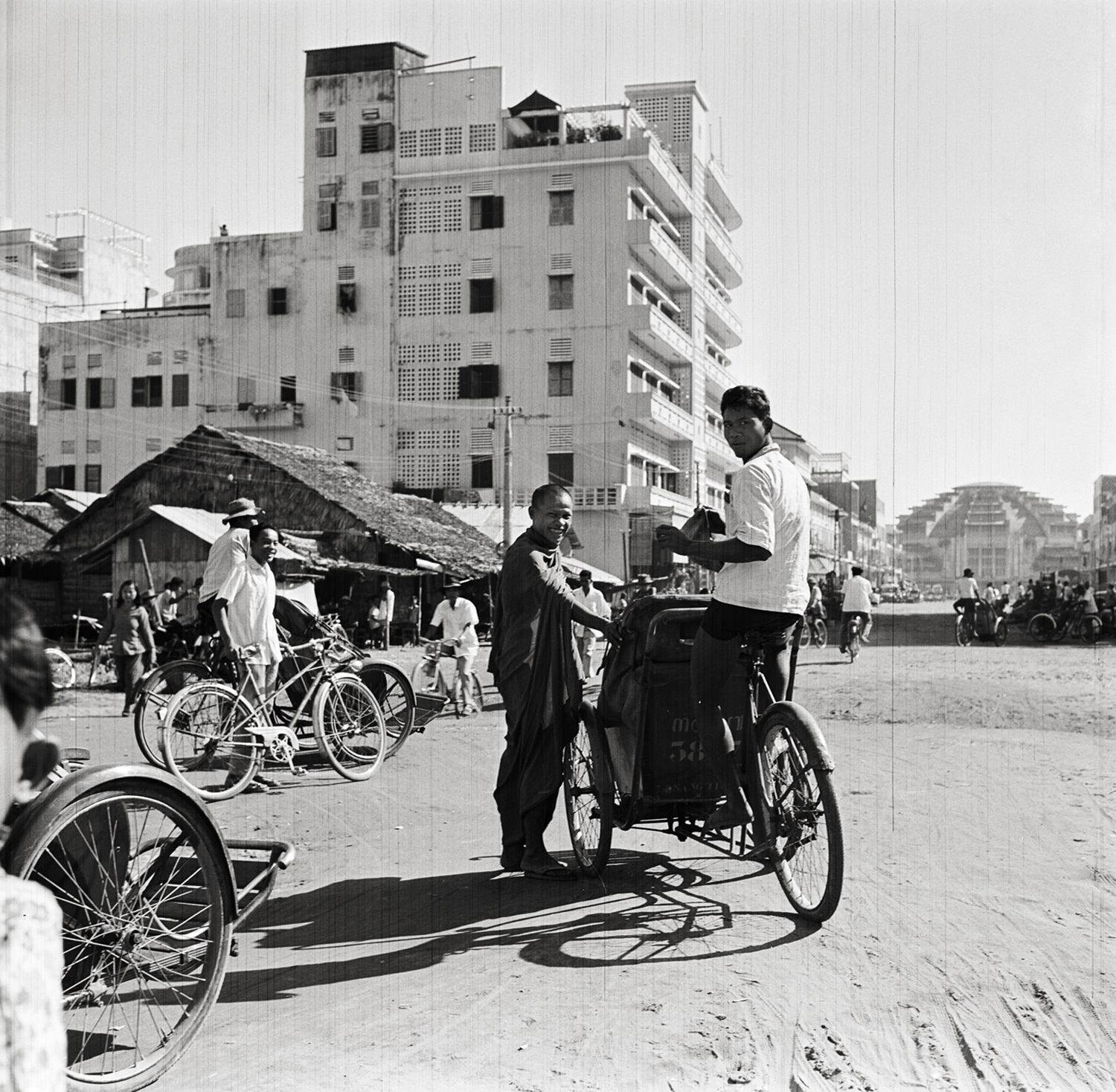
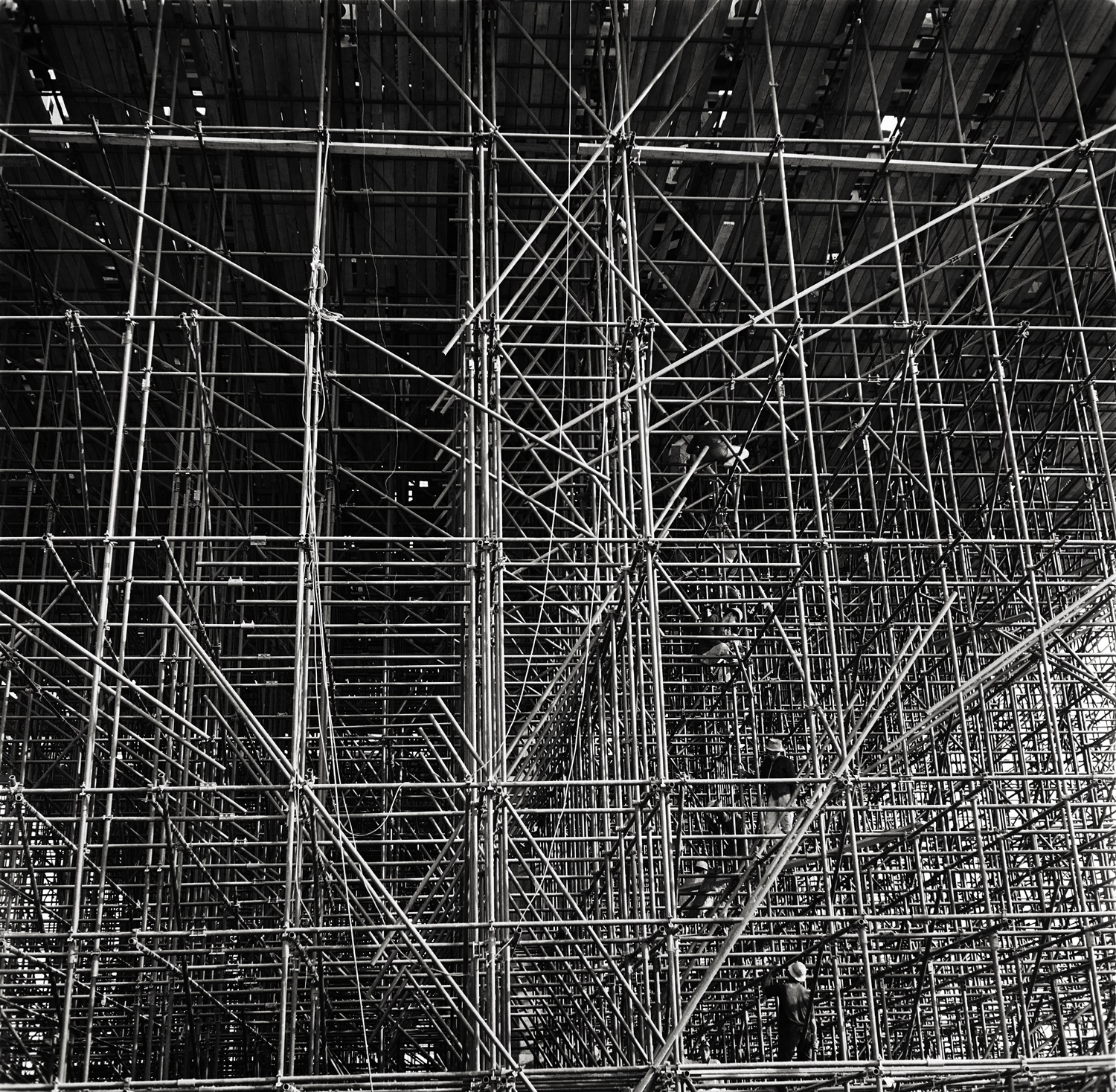
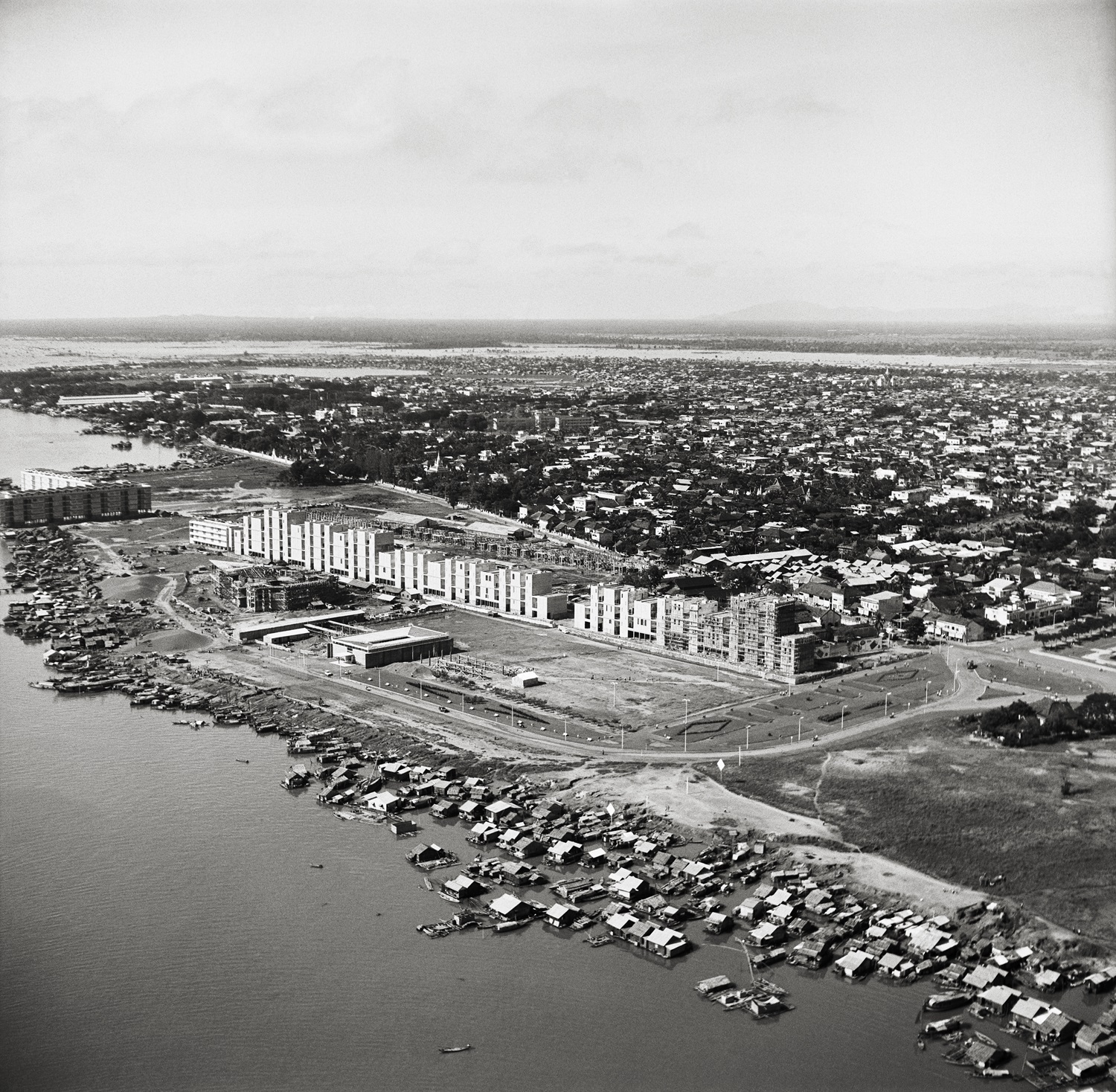
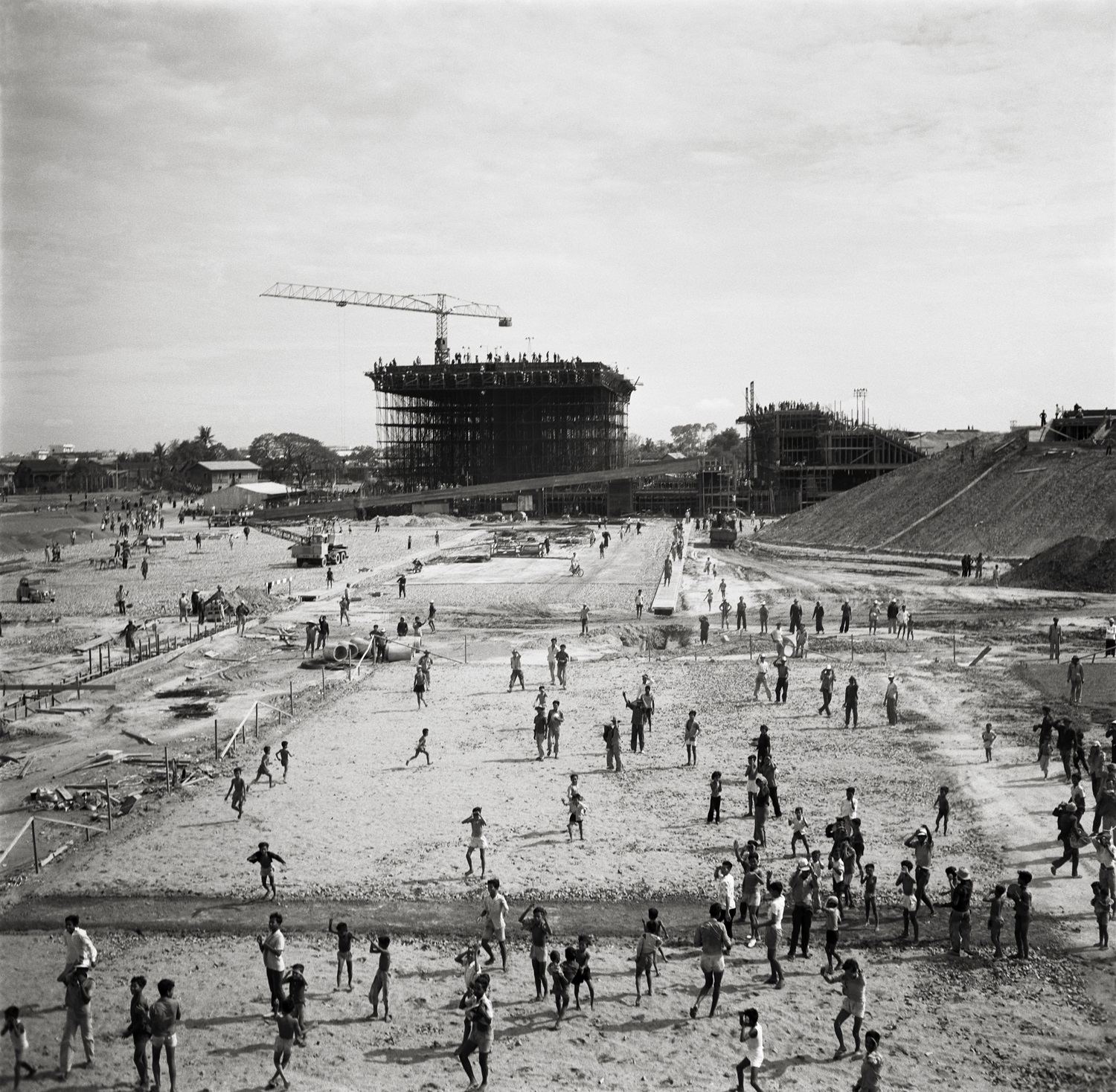
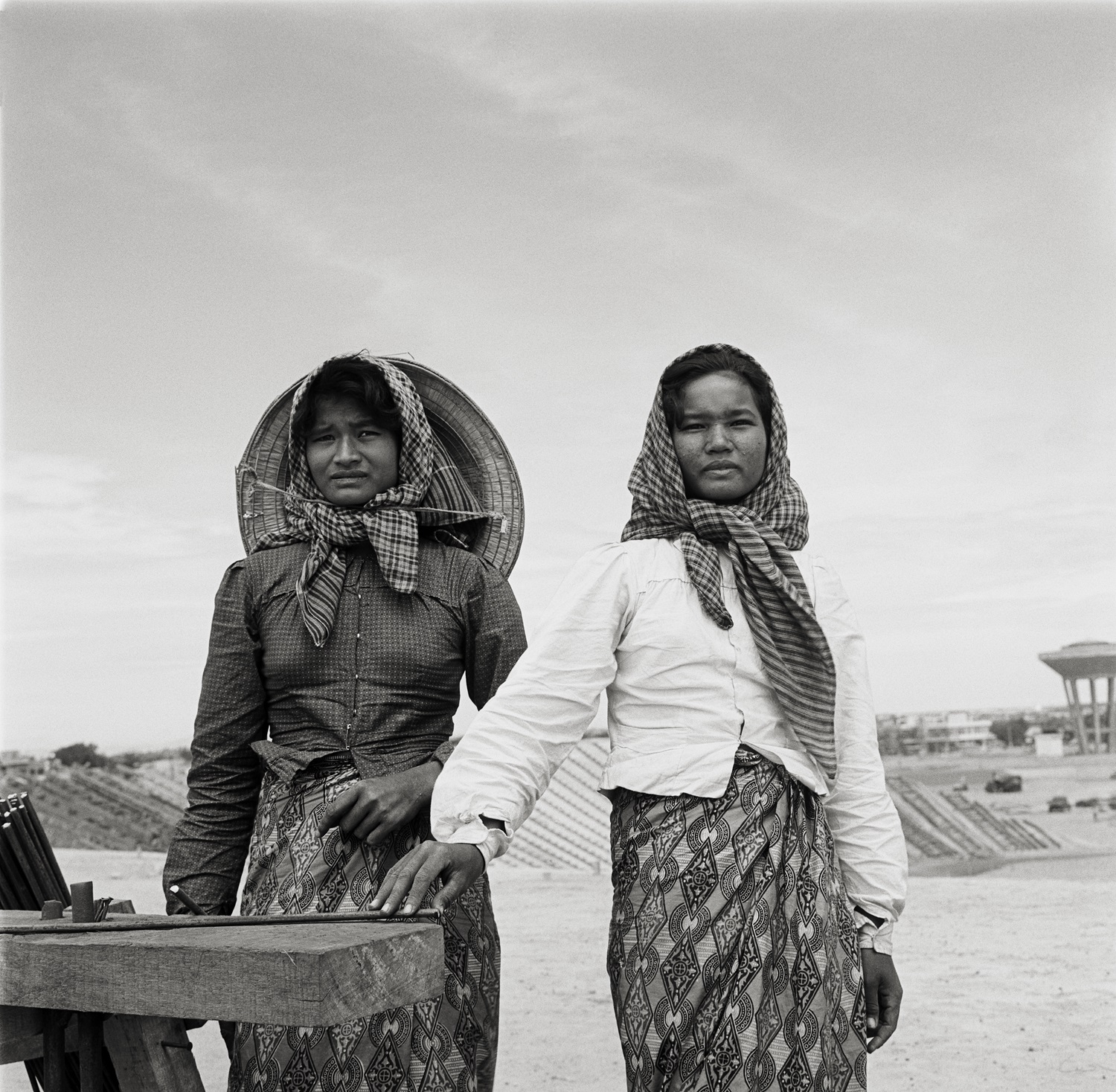
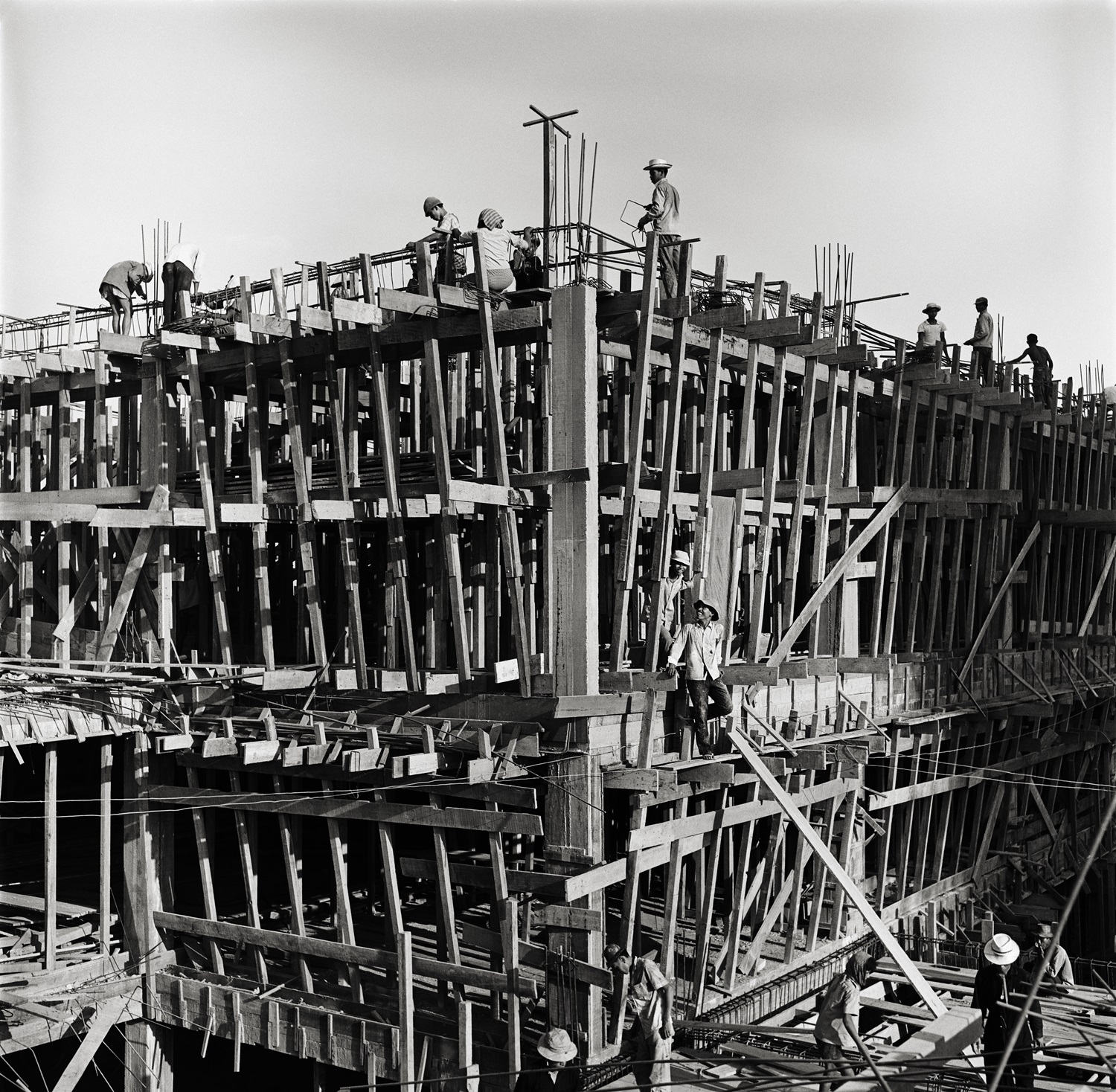
Photo credit: Micheline DULLIN
Musée national du Cambodge // National Museum of Cambodia
Phnom Penh 1958-1964
by Micheline DULLIN
It was in Phnom Penh that Micheline Dullin first became a professional photographer. Until then, she had combined her practice of painting
with a joyful discovery of analog photography. She became the official photographer of Prince Norodom Sihanouk. She discovered Cambodia with
the freedom and curiosity that would define her throughout her life, and with a profoundly generous eye for its people — both those she met
in the countryside and the workers she spent long hours alongside on the major construction projects she was commissioned to document. It
was a time of ambitious building sites, including the Olympic Stadium, where she took many photographs — sometimes spectacular — yet always
attentive to the human presence, even when the individual seems dwarfed by the scale of what is being built. In all her photographs, one
senses a deep sympathy for those she observes. In a way, her point of view never changed, whether she was working on assignment or
simply recording a moment or scene that moves her.
She used to say: “One should not define oneself as a photographer ‘of’. One is a photographer.” And in Phnom Penh of the 1960s, Micheline Dullin was ‘the’ photographer. This is all the more remarkable given that the profession was rarely taken up by women — even less so then than now, though in truth, things have hardly changed — and that she took a close interest in worlds generally considered male domains. Because she worked on assignment, she was able to produce aerial views that offer a unique testimony of Phnom Penh at the time — rare documents that allow us to see again buildings that have since vanished, such as the White Building, or areas like Boeung Kak Lake, and to appreciate how harmoniously horizontal the city’s layout once was.
Micheline Dullin always cultivated the balance of the square format, the subtleties of black and white, and captured the vibration of light with a striking tension between documentary precision and empathy. Her portrait of Phnom Penh in the early 1960s remains without equal.
---
Phnom Penh 1958-1964
de Micheline DULLIN
C’est à Phnom Penh que Micheline Dullin devient photographe professionnelle. Celle qui avait jusque-là partagé sa pratique de la peinture
avec une découverte heureuse de l’image argentique est la photographe officielle du prince Norodom Sihanouk. Elle découvre le Cambodge avec
la liberté et la curiosité qui l’ont caractérisée durant toute sa vie et, également, avec un regard très généreux envers les habitants.
Aussi bien ceux qu’elle ira rencontrer dans les campagnes que les travailleurs qu’elle va longuement côtoyer sur les grands travaux qu’elle
documente dans le cadre de commandes. Nous sommes à l’époque de la construction de chantiers ambitieux, dont le Stade Olympique où elle
réalisera beaucoup de prises de vue, parfois spectaculaires, mais dans lesquels l’individu même s’il est parfois écrasé par la dimension des
projets qu’il construit est toujours présent. On sent, dans toutes ces photographies, une sympathie profonde pour ceux et celles qu’elle
regarde. D’une certaine manière, elle ne change pas de point de vue, qu’elle soit au travail et en commande ou qu’elle veuille
simplement garder trace d’un moment ou d’une scène qui la touchent.
Elle disait : « On ne doit pas encore se déterminer comme photographe “de”. On est photographe ». Et, dans ce Phnom Penh des années soixante, Micheline Dullin est « la » photographe. D’autant plus remarquable que cette profession est rarement embrassée par les femmes — encore moins hier qu’aujourd’hui, encore que les choses, au fond, n’aient guère changé — et qu’elle s’intéresse de près à des univers plutôt masculins. Parce qu’elle travaille dans le cadre de la commande, elle a pu réaliser des vues aériennes qui sont un témoignage unique sur Phnom Penh à l’époque, des documents rares qui nous permettent de revoir des bâtiments disparus comme le White building ou des espaces comme le lac Boeung Kak et de percevoir à quel point la ville était conçue dans une harmonie horizontale.
Micheline Dullin a toujours cultivé l’équilibre du carré, les subtilités du noir et blanc, a capté les vibrations de la lumière avec une belle tension entre documentaire et empathie. Son portrait du Phnom Penh du début des années soixante est sans équivalent.